
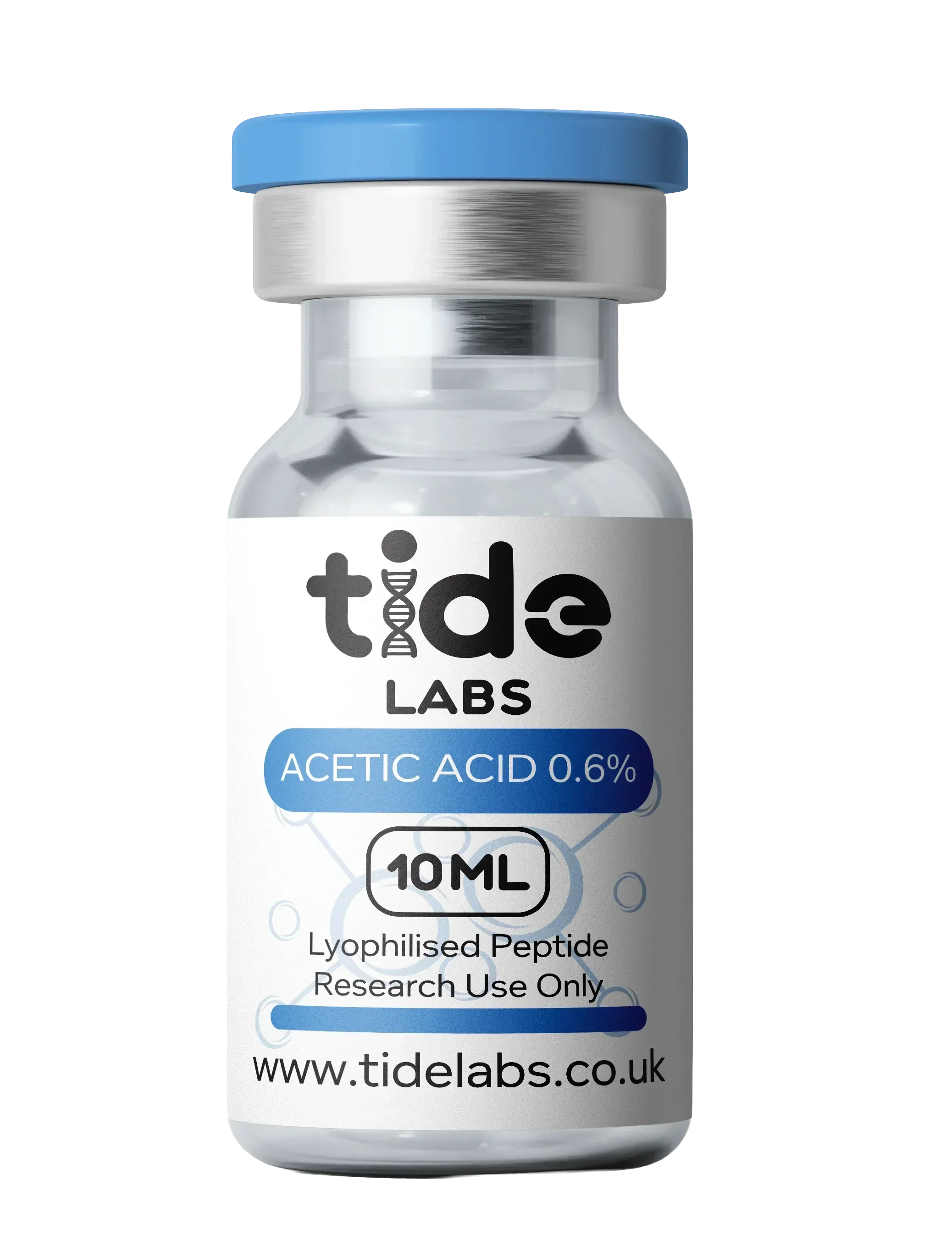
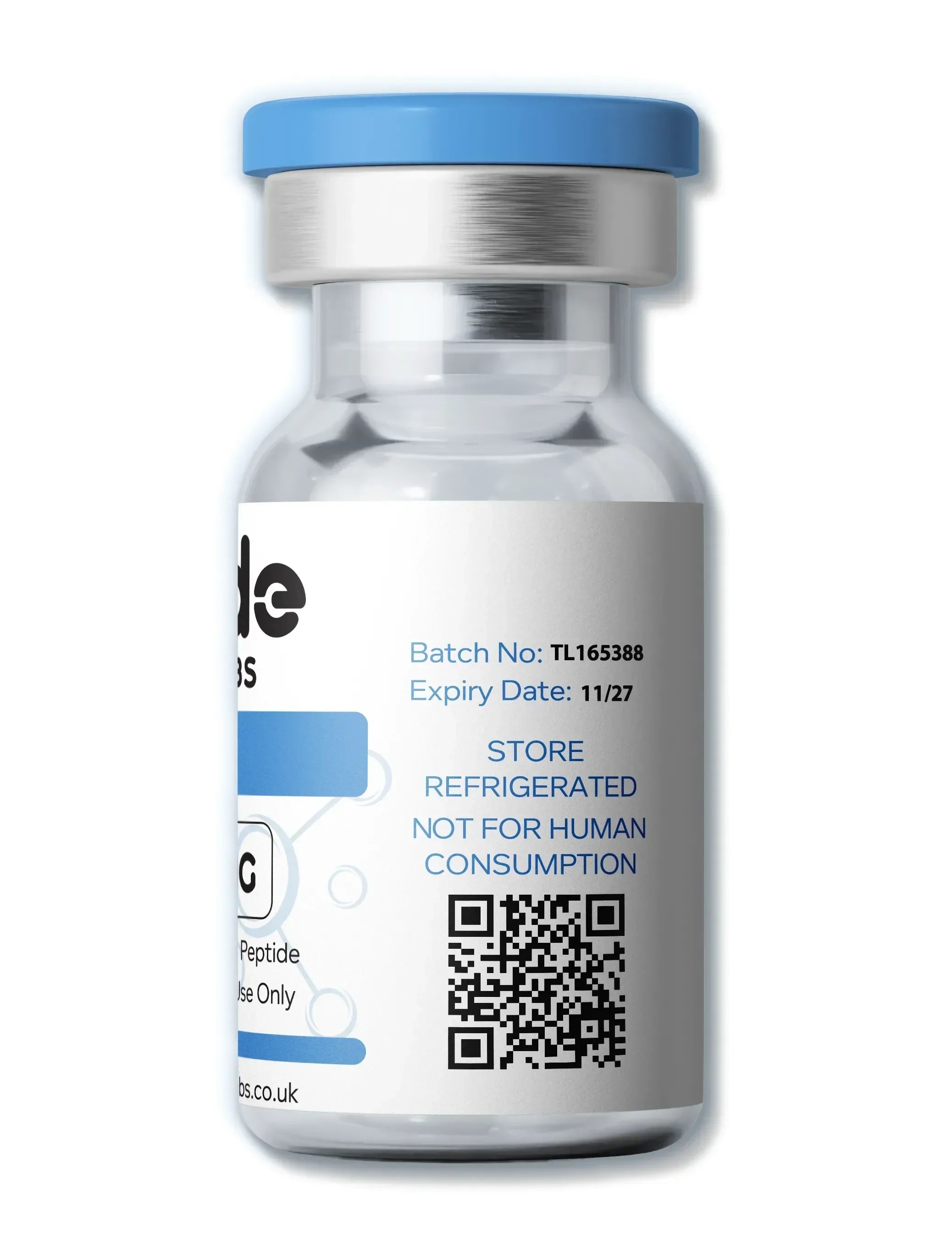

Acetic Acid 0.6% Solution 10ml
Certificate of Analysis (COA): Available Here
Acetic Acid 0.6% Solution is a pharmaceutical-grade reconstitution solvent widely used in research settings for preparing lyophilised peptides. This sterile, pH-balanced solution is specifically formulated to maintain peptide stability during reconstitution, particularly for compounds sensitive to neutral pH environments. Acetic Acid 0.6% has become a standard reagent in laboratories working with peptides requiring acidic conditions for optimal solubility and structural integrity.
Area of Interest
Acetic Acid 0.6% is commonly utilised in research applications involving:
- Peptide Reconstitution: Preferred solvent for peptides requiring acidic conditions to maintain structural integrity, including BPC-157 and certain copper-based peptides.
- pH-Sensitive Formulations: Used in studies where neutral pH may cause peptide aggregation or degradation, particularly in compounds with complex tertiary structures.
- Stability Studies: Applied in pharmaceutical research to evaluate peptide shelf-life and degradation kinetics under acidic conditions.
- Comparative Reconstitution Research: Employed in laboratory protocols examining the impact of pH on peptide bioavailability and structural conformation.
This solution is a critical component in laboratories prioritising reproducibility and peptide integrity across experimental protocols.
Technical Information
- Chemical Name: Acetic Acid Solution (0.6% v/v)
- Synonyms: Dilute Acetic Acid, Ethanoic Acid Solution
- Molecular Formula: C₂H₄O₂ (in aqueous solution)
- Concentration: 0.6% (v/v) in sterile water for injection
- pH Range: Approximately 3.5–4.0
- Volume: 10ml per vial
- Sterility: Sterile-filtered (0.22µm) for research use
- Classification: Reconstitution solvent for research peptides
Storage Guidelines
- Store at 2–8°C (refrigerated) to maintain sterility.
- Protect from light and extreme temperatures.
- Discard if solution becomes cloudy or discoloured.
- Use sterile technique when accessing vial to prevent contamination.
Solubility & Compatibility
Acetic Acid 0.6% is compatible with most lyophilised peptides requiring acidic reconstitution. It is particularly suited for peptides prone to aggregation in neutral or alkaline environments. For peptides stable at neutral pH, Bacteriostatic Water may be a more appropriate alternative.
Usage Considerations
When reconstituting peptides with Acetic Acid 0.6%, researchers should:
- Verify peptide-specific reconstitution protocols, as some compounds may require alternative solvents.
- Use sterile technique to avoid contamination.
- Allow lyophilised peptide to reach room temperature before adding solvent to minimise shock-induced degradation.
- Gently swirl (do not shake) to ensure complete dissolution without denaturing the peptide.
Why Acetic Acid for Peptide Research?
Many research peptides, including GHK-Cu and BPC-157, demonstrate enhanced stability in mildly acidic environments. Acetic Acid 0.6% provides a controlled pH that reduces hydrolysis and oxidation, two primary degradation pathways for peptides in aqueous solution. This makes it a preferred choice in laboratories where peptide integrity and reproducibility are critical.
References
- Manning, M. C., Chou, D. K., Murphy, B. M., et al. (2010). "Stability of protein pharmaceuticals: an update." Pharmaceutical Research, 27(4), 544–575. https://doi.org/10.1007/s11095-009-0045-6
- Wang, W. (2015). "Advanced protein formulations." Protein Science, 24(7), 1031–1039. https://doi.org/10.1002/pro.2684
- Cleland, J. L., Powell, M. F., & Shire, S. J. (1993). "The development of stable protein formulations: a close look at protein aggregation, deamidation, and oxidation." Critical Reviews in Therapeutic Drug Carrier Systems, 10(4), 307–377. PMID: 8124728
Certificate of Analysis (COA): Available Here
Acetic Acid 0.6% Solution 10ml
The Difference Is Clear
Tide Labs vs. Typical UK Suppliers
Most UK peptide suppliers cut corners on testing, storage, and documentation. Here's what sets us apart.