
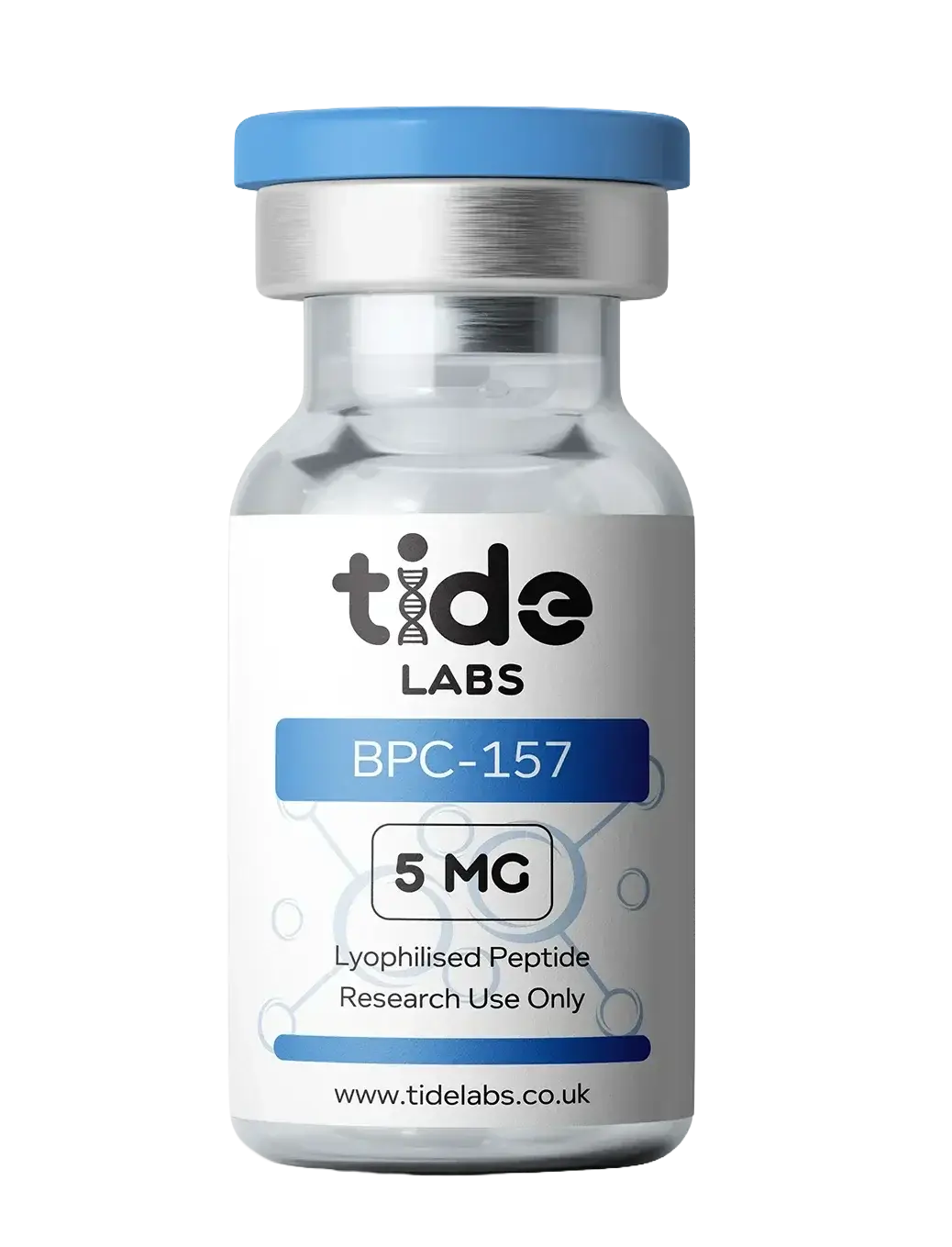
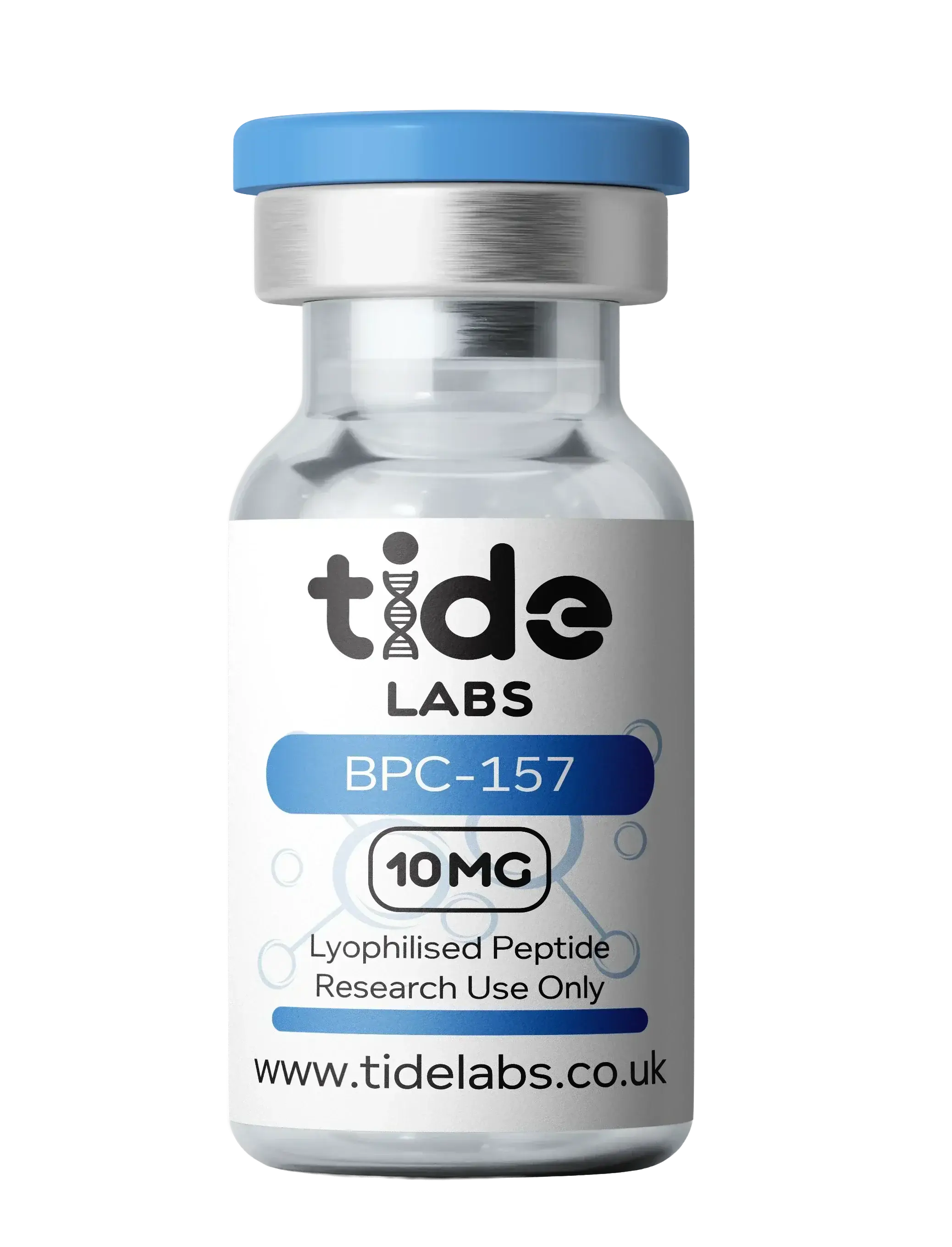



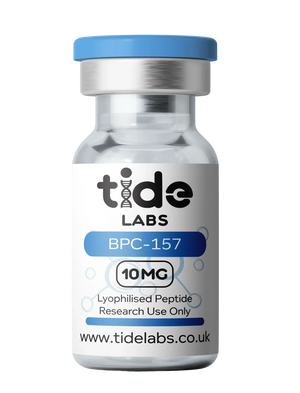
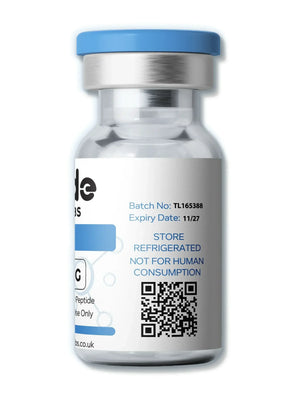


BPC-157
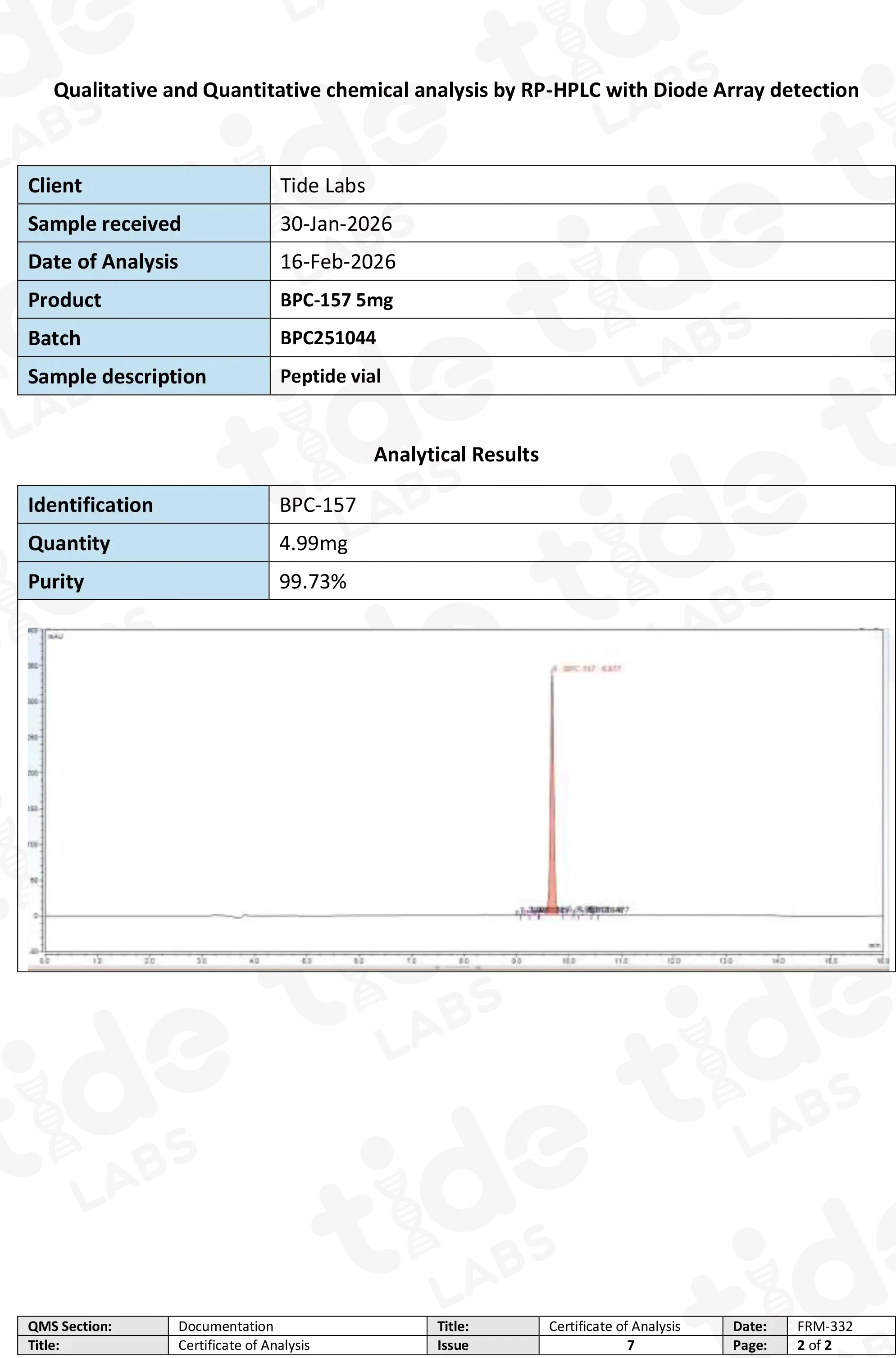
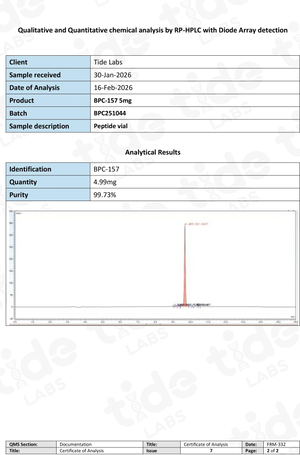
Certificate of Analysis (COA): See Images
BPC-157 (Body Protection Compound-157) is a synthetic research peptide that has become an exciting subject of study in recent years. Preclinical research has highlighted its potential across multiple biological systems, particularly in areas related to tissue repair, gastrointestinal protection, angiogenesis, and neural recovery. While not approved for human or veterinary use, BPC-157 continues to generate strong interest as a promising candidate in laboratory and academic research settings.
Area of Interest
Research on BPC-157 has focused on several areas of interest:
- Gastrointestinal Studies: Investigated for its ability to influence mucosal integrity, gastric ulcer models, and intestinal protection.
- Musculoskeletal Research: Studied in tendon, ligament, and muscle injury models, where it has been linked with improved angiogenesis and repair responses.
- Neurological Exploration: Preclinical models have examined potential effects on neuroprotection, including recovery after traumatic brain injury or spinal cord injury.
- Vascular & Systemic Effects: Research includes potential roles in blood vessel formation, wound healing, and modulation of inflammatory pathways.
Together, these studies position BPC-157 as one of the most actively investigated peptides in the research space, reflecting its potential as an exciting area of discovery.
Technical Information
- Chemical Name: Pentadecapeptide BPC-157 (Body Protection Compound-157)
- Synonyms: PL 14736, BPC157, Bepecin
- Molecular Formula: C₆₂H₉₈N₁₆O₂₂
- Molecular Weight: 1419.53 g/mol
- Sequence (Amino Acid): Gly-Glu-Pro-Pro-Pro-Gly-Lys-Pro-Ala-Asp-Asp-Ala-Gly-Leu-Val (GEPPPGKPADDAGLV)
- CAS Number: 137525-51-0
- Peptide Classification: Synthetic peptide fragment derived from human gastric juice protein
Storage Guidelines
- Lyophilized peptide is stable at room temperature for several weeks.
- For long-term storage, keep at −20°C or below.
-
Once reconstituted, store at 2–8 °C. Effective use depends on the solution used.
Solubility
BPC-157 is soluble in sterile water, acetic acid, or other aqueous buffers depending on formulation and purity.
References
- Sikiric, P., Seiwerth, S., Grabarevic, Z., et al. (2001). “A new gastric juice peptide, BPC, heals both acute and chronic gastrointestinal lesions.” Journal of Physiology (Paris), 95(1-6), 79–92. https://doi.org/10.1016/S0928-4257(01)00011-5
- Seiwerth, S., Rucman, R., Turkovic, B., et al. (2014). “Stable gastric pentadecapeptide BPC 157: novel mediator of Robert’s cytoprotection and adaptive cytoprotection.” Current Pharmaceutical Design, 20(7), 1126–1135. https://doi.org/10.2174/13816128113199990435
- Perovic, D., Gojkovic, S., Jelic, M., et al. (2019). “Molecular mechanisms of BPC 157.” Current Medicinal Chemistry, 26(20), 3704–3725. https://doi.org/10.2174/0929867325666181114161328
- Vlainic, J., Vukelic, I., Perovic, D., et al. (2020). “BPC 157 and its effects on the central nervous system.” Biomedicine & Pharmacotherapy, 127, 110158. https://doi.org/10.1016/j.biopha.2020.110158
BPC-157
The Difference Is Clear
Tide Labs vs. Typical UK Suppliers
Most UK peptide suppliers cut corners on testing, storage, and documentation. Here's what sets us apart.