
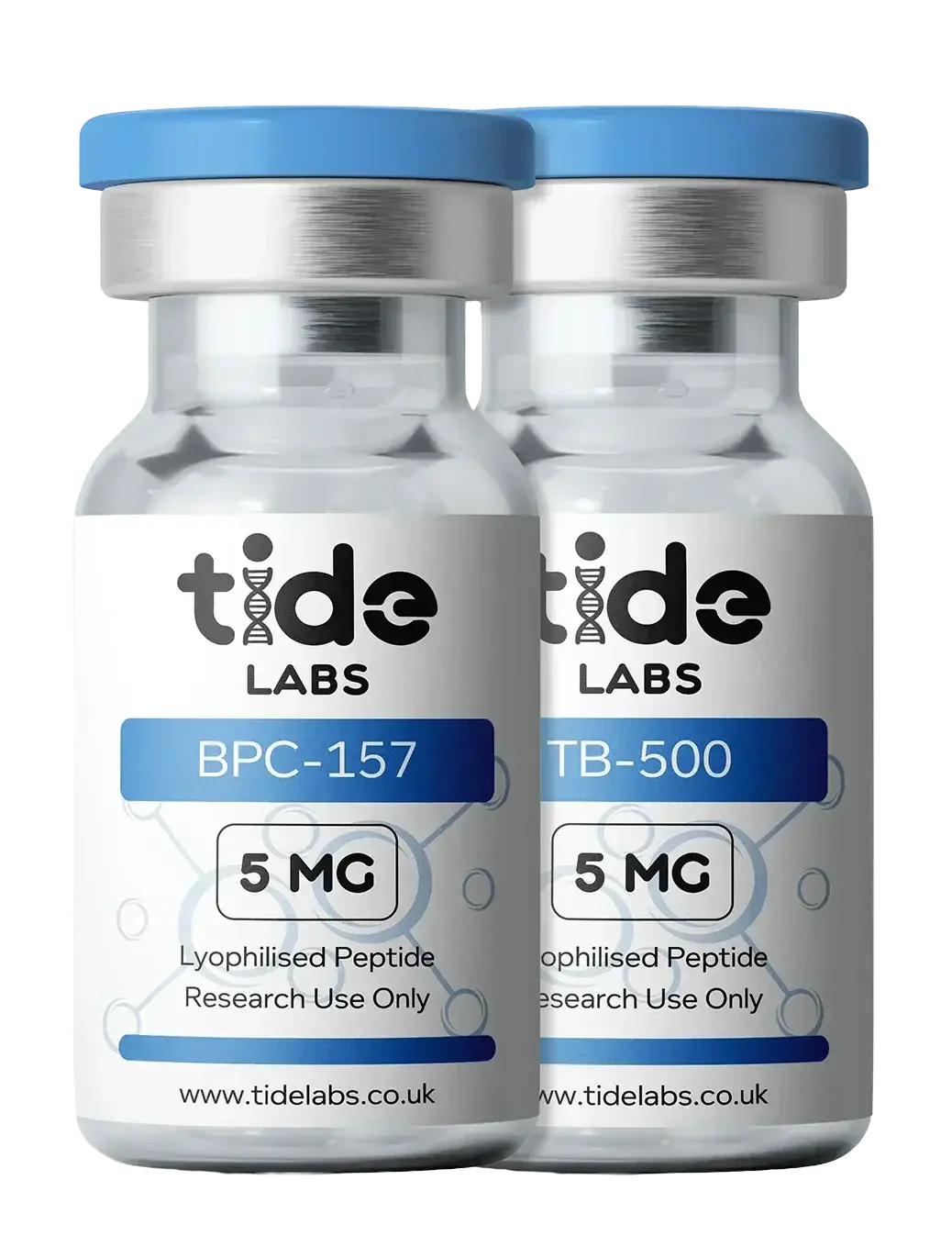
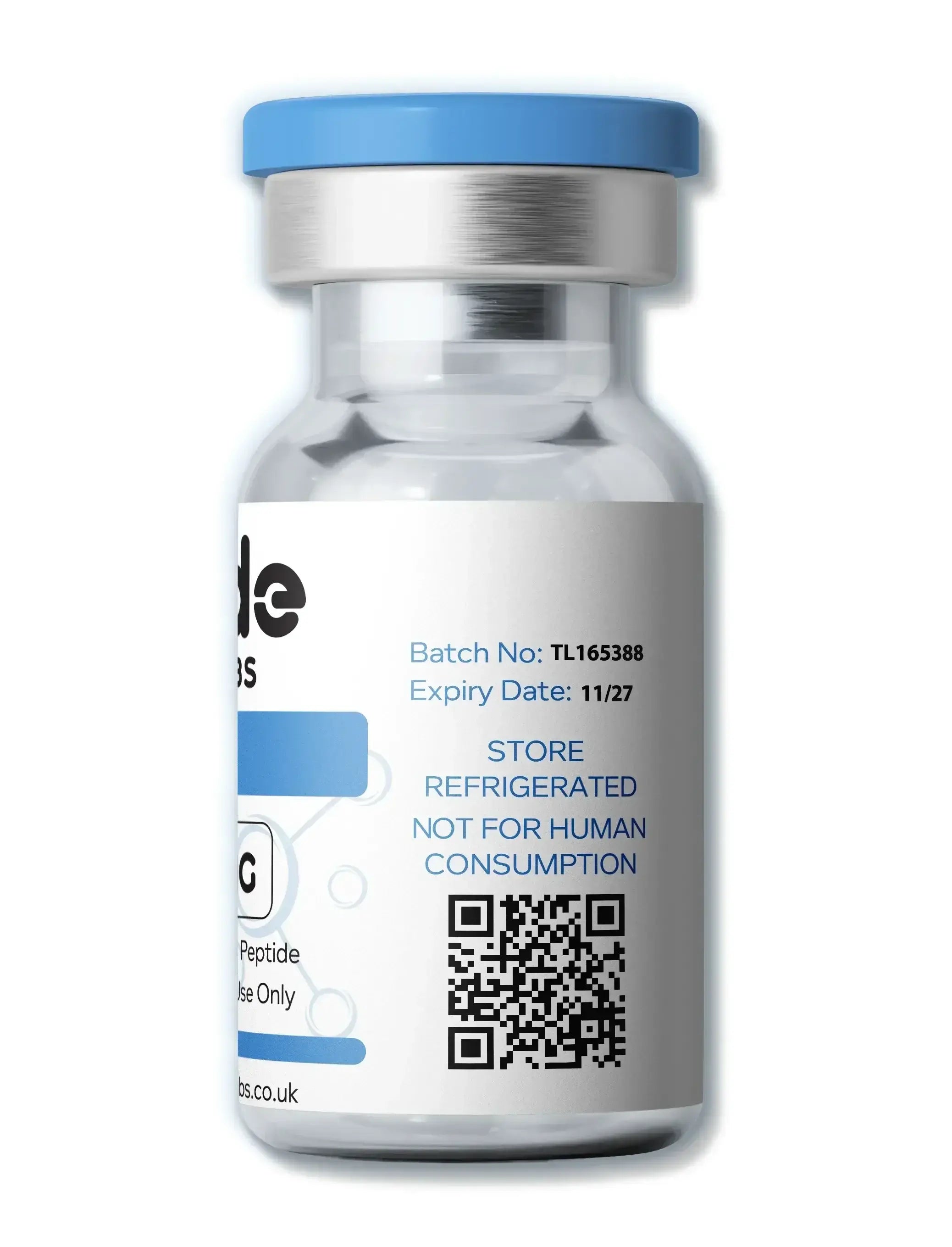





BPC-157 + TB-500 blend 10mg
Certificate of Analysis (COA): See Images
BPC-157 + TB-500 Blend brings together two of the most studied research peptides in regenerative science. BPC-157, derived from a protective protein in gastric juice, and TB-500, a synthetic fragment of Thymosin Beta-4, have both been investigated for their potential roles in healing, tissue repair, and cellular regeneration. When studied together, this blend represents an exciting area of research focused on synergistic effects in models of recovery and repair.
Wonder why we don't put it all in one research Vial? See Here for the reason.
Area of Interest
Researchers have investigated the BPC-157 + TB-500 combination across several areas of preclinical and laboratory study:
- Tissue Healing: Both peptides are explored for their roles in supporting tendon, ligament, and muscle recovery in injury models.
- Angiogenesis & Blood Flow: TB-500 has been studied for promoting new blood vessel growth, while BPC-157 has been linked with protective effects on vascular tissue.
- Anti-Inflammatory Potential: Evidence suggests both peptides may influence inflammatory pathways, making the blend of high interest in chronic injury research.
- Synergistic Effects: By combining BPC-157’s focus on gut and connective tissue repair with TB-500’s angiogenic and cellular migration properties, researchers are exploring whether the blend offers a broader range of regenerative potential.
This combination is regarded in research settings as a versatile and promising area of study within peptide science.
Technical Information
- Chemical Names: Pentadecapeptide BPC-157 & Thymosin Beta-4 Fragment (TB-500)
- Synonyms: BPC157, Bepecin, PL 14736, TB500, Thymosin Beta-4 Ac-SDKP Fragment
- Molecular Formula (BPC-157): C₆₂H₉₈N₁₆O₂₂
- Molecular Weight (BPC-157): 1419.53 g/mol
- Molecular Formula (TB-500): C₂₁₂H₃₅₀N₅₆O₇₈S
- Molecular Weight (TB-500): ~4963 g/mol (full Thymosin Beta-4; TB-500 is a synthetic fragment)
- Peptide Classification: Synthetic peptides – BPC-157 derived from gastric protein, TB-500 derived from Thymosin Beta-4
Storage Guidelines
- Lyophilized peptides are stable at room temperature for short periods.
- For long-term storage, keep at −20°C or below.
-
Once reconstituted, store at 2–8 °C. Effective use depends on the solution used.
Solubility
Both peptides are soluble in sterile water, acetic acid, or other aqueous buffers depending on purity and formulation.
References
- Sikiric, P., Seiwerth, S., Grabarevic, Z., et al. (2001). “A new gastric juice peptide, BPC, heals both acute and chronic gastrointestinal lesions.” Journal of Physiology (Paris), 95(1-6), 79–92. https://doi.org/10.1016/S0928-4257(01)00011-5
- Philp, D., Badamchian, M., Scheremeta, B., et al. (2003). “Thymosin beta4 and angiogenesis: initiation of new blood vessel growth.” Annals of the New York Academy of Sciences, 1002, 168–177. https://doi.org/10.1196/annals.1283.018
- Malinda, K. M., Sidhu, G. S., Mani, H., et al. (1999). “Thymosin beta4 accelerates wound healing.” Journal of Investigative Dermatology, 113(3), 364–368. https://doi.org/10.1046/j.1523-1747.1999.00705.x
- Seiwerth, S., Rucman, R., Turkovic, B., et al. (2014). “Stable gastric pentadecapeptide BPC 157: novel mediator of Robert’s cytoprotection and adaptive cytoprotection.” Current Pharmaceutical Design, 20(7), 1126–1135. https://doi.org/10.2174/13816128113199990435
Certificate of Analysis (COA): See Images
BPC-157 + TB-500 blend 10mg
The Difference Is Clear
Tide Labs vs. Typical UK Suppliers
Most UK peptide suppliers cut corners on testing, storage, and documentation. Here's what sets us apart.