
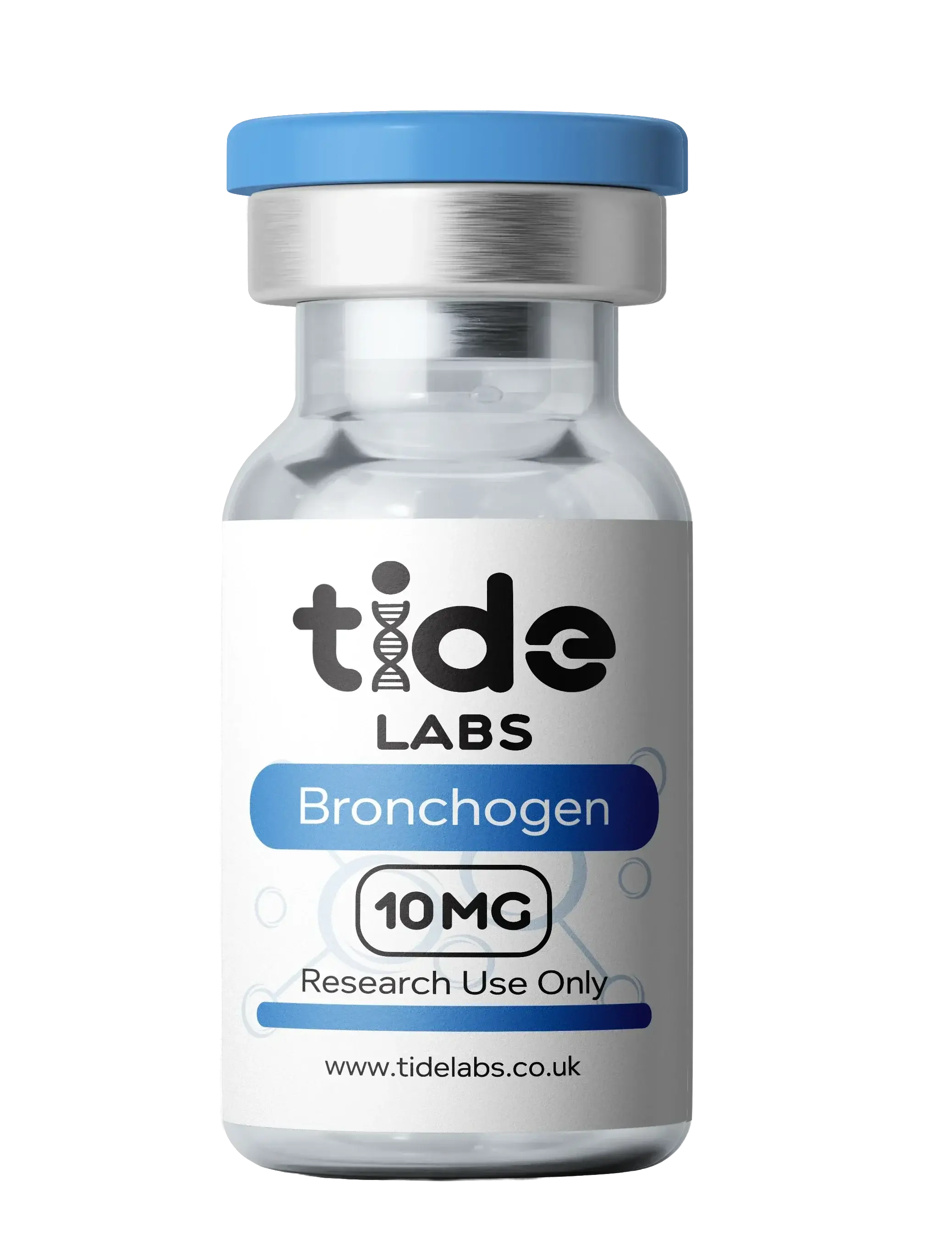
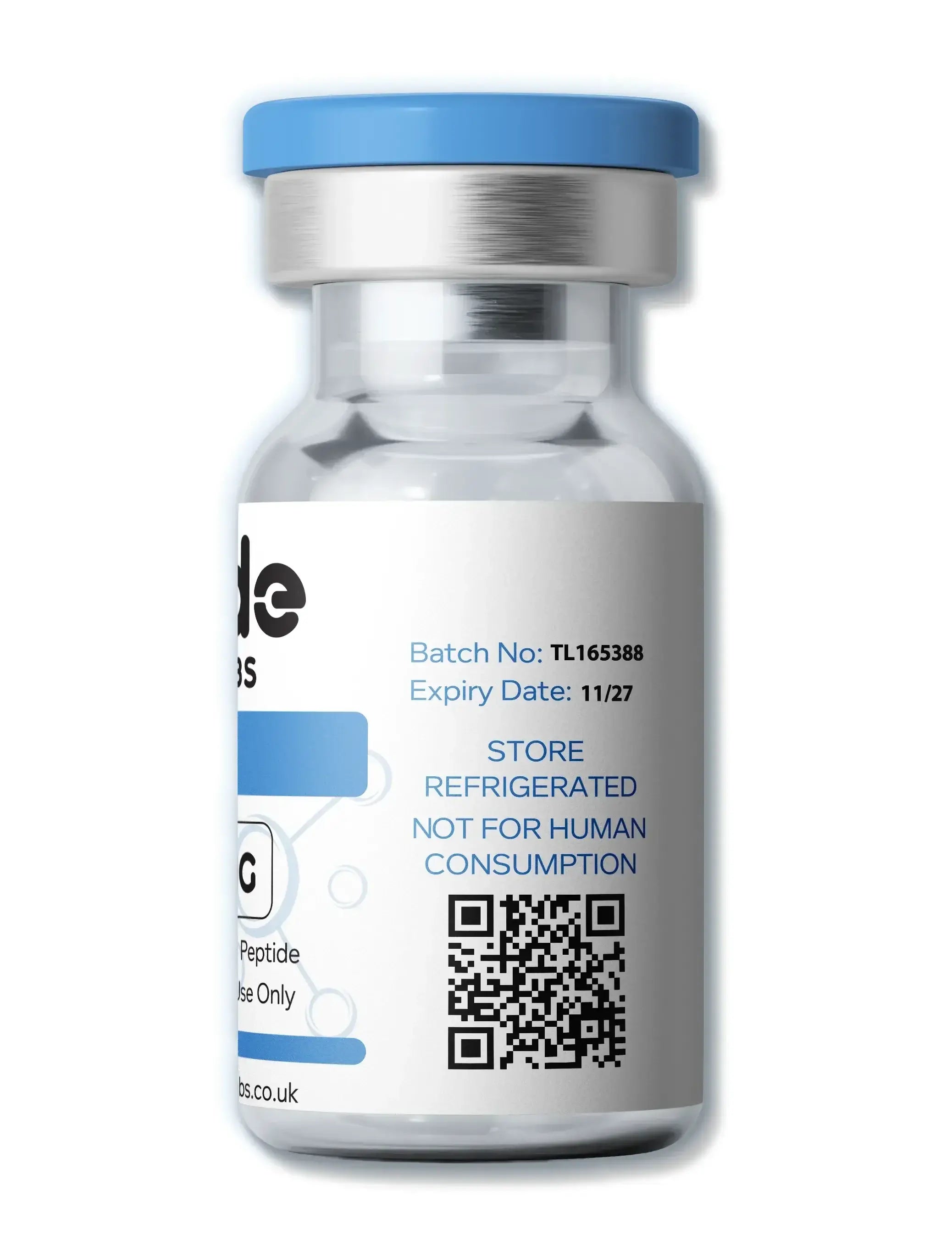


Bronchogen
Certificate of Analysis (COA): See Images
Bronchogen (Ala-Glu-Asp-Leu) is a synthetic tetrapeptide best known in the research literature for its interaction with DNA. First synthesised from a sequence associated with bronchial mucosa, this ultra-short Khavinson bioregulator has been studied for its apparent ability to enter the cell nucleus and influence the expression of genes tied to respiratory epithelial identity. While not approved for human or veterinary use, Bronchogen is widely used as a research peptide in laboratory and academic studies of peptide-DNA interaction and tissue-specific gene regulation.
Research Applications
Laboratory investigation of Bronchogen spans molecular, cellular, and gene-expression studies, including:
- Peptide-DNA Binding: Molecular studies report that the AEDL sequence interacts with DNA at the guanine N7 site in the major groove, apparently without distorting the double-helix structure, and influences DNA thermostability.
- Lung-Associated Gene Activation: In bronchial epithelial cell cultures, Bronchogen has been reported to increase expression of transcription factors and markers including NKX2-1, FOXA1, FOXA2 and SCGB1A1, with reported effects more pronounced in older (later-passage) cultures.
- Epithelial Cell Kinetics: Studied in cell-culture models for its influence on the proliferation and differentiation of bronchial epithelial cells.
Because its activity centres on direct gene regulation rather than receptor signalling, Bronchogen is often used as a model compound for studying how ultra-short peptides reach and act on nuclear DNA. Researchers working with it frequently study it in parallel with other Khavinson bioregulators such as Cortagen and Pancragen.
Technical Information
- Chemical Name: L-Alanyl-L-α-glutamyl-L-α-aspartyl-L-leucine
- Synonyms: AEDL, H-Ala-Glu-Asp-Leu-OH, Bronchogen
- Molecular Formula: C₁₈H₃₀N₄O₉
- Molecular Weight: 446.45 g/mol
- Sequence (Amino Acid): Ala-Glu-Asp-Leu (AEDL)
- CAS Number: Not assigned
- Peptide Classification: Synthetic Khavinson organ-specific short peptide bioregulator (tetrapeptide)
Storage Guidelines
- Lyophilized peptide is stable at room temperature for several weeks.
- For long-term storage, keep at −20°C or below.
-
Once reconstituted, store at 2–8 °C. Effective use depends on the solution used.
Solubility
Bronchogen dissolves readily in bacteriostatic water, with reconstitution in standard aqueous buffers also reported in the literature.
References
- Monaselidze, J., Khavinson, V., Gorgoshidze, M., et al. (2011). "Effect of the Peptide Bronchogen (Ala-Asp-Glu-Leu) on DNA Thermostability." Bulletin of Experimental Biology and Medicine, 150(3), 375–377. https://doi.org/10.1007/s10517-011-1146-x
- Fedoreyeva, L. I., Kireev, I. I., Khavinson, V. K., & Vanyushin, B. F. (2011). "Penetration of short fluorescence-labeled peptides into the nucleus in HeLa cells and in vitro specific interaction of the peptides with deoxyribooligonucleotides and DNA." Biochemistry (Moscow), 76(11), 1210–1219. https://doi.org/10.1134/S0006297911110022
- Khavinson, V. K., Popovich, I. G., Linkova, N. S., et al. (2021). "Peptide Regulation of Gene Expression: A Systematic Review." Molecules, 26(22), 7053. https://doi.org/10.3390/molecules26227053
The Difference Is Clear
Tide Labs vs. Typical UK Suppliers
Most UK peptide suppliers cut corners on testing, storage, and documentation. Here's what sets us apart.