
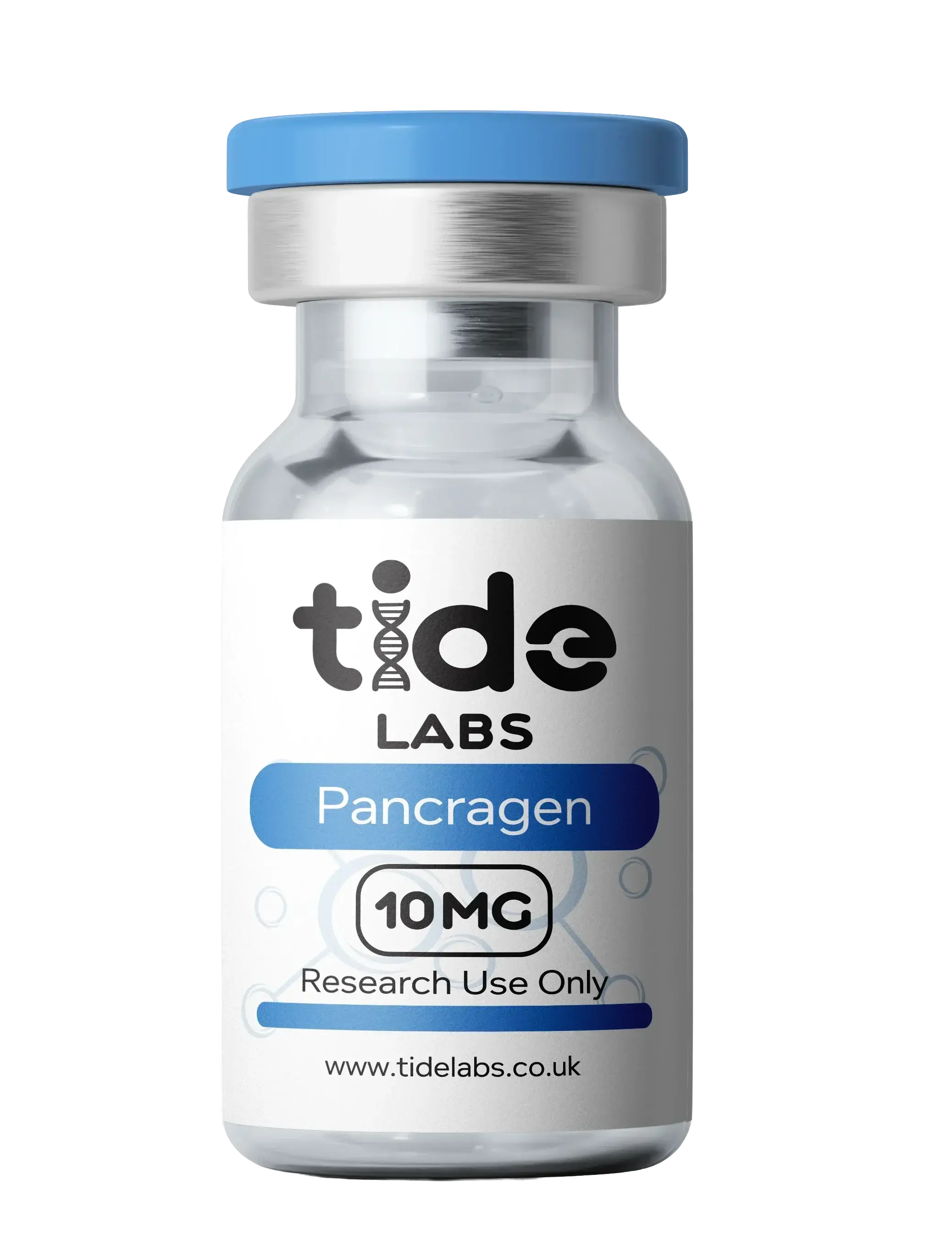
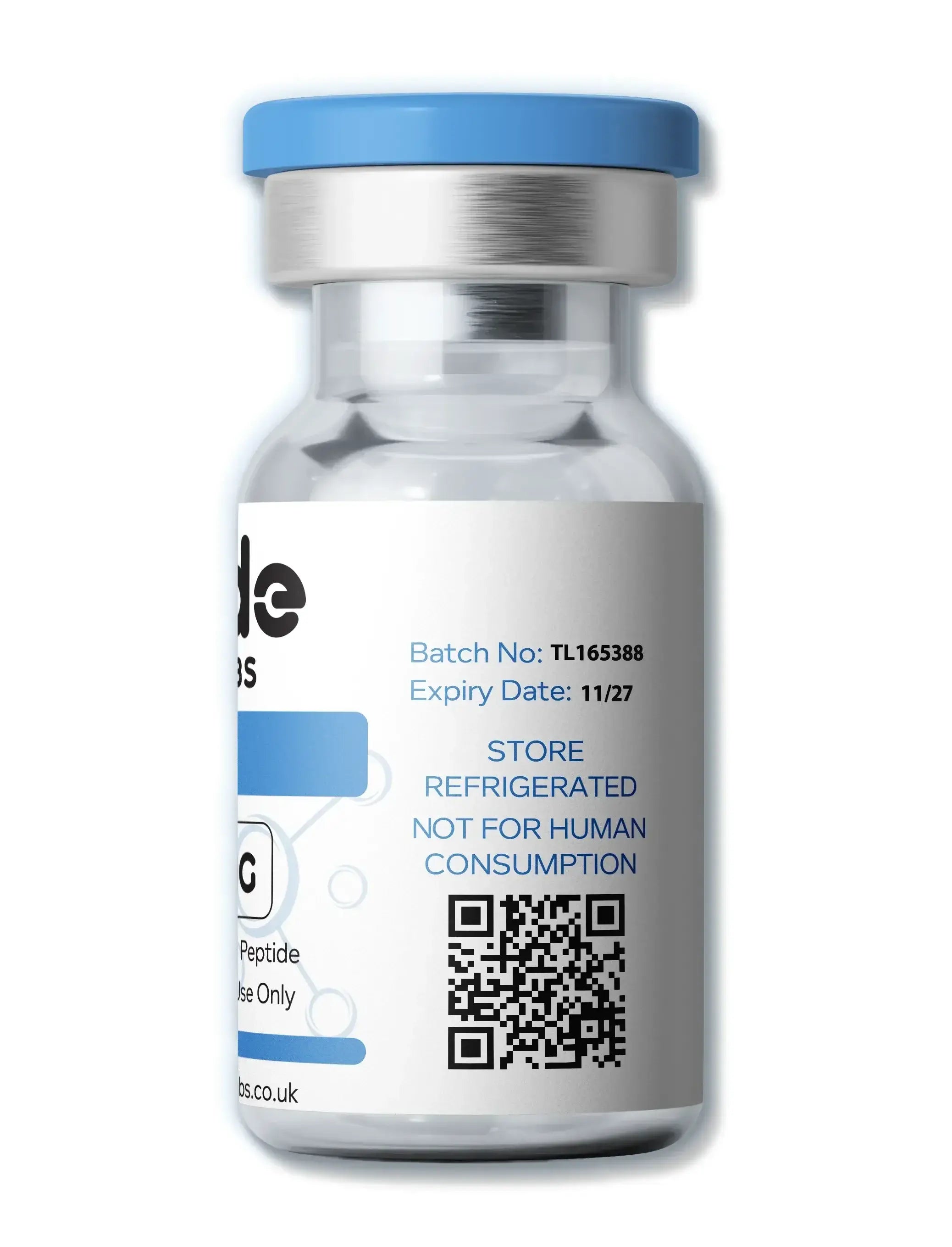


Pancragen
Certificate of Analysis (COA): See Images
Pancragen (Lys-Glu-Asp-Trp) is a synthetic research tetrapeptide and a pancreas-associated member of the Khavinson family of short peptide bioregulators. Originally derived from a peptide identified in pancreatic tissue, Pancragen has become an exciting subject of study in preclinical research, particularly in areas related to tissue-specific gene expression, pancreatic cell differentiation, and age-associated endocrine function. While not approved for human or veterinary use, Pancragen continues to generate strong interest as a promising candidate in laboratory and academic research settings.
Area of Interest
Research on Pancragen has focused on several areas of interest:
- Glucose Tolerance Models: Investigated in preclinical primate studies examining glucose, insulin, and C-peptide responses in aged animals, where reported effects partially persisted for several weeks after administration.
- Pancreatic Cell Differentiation: Examined in human pancreatic cell cultures for its influence on differentiation-associated factors such as CXCL12 and Hoxa3, with effects reported as more pronounced in aged cell models.
- Gene Expression Regulation: Studied for its ability to influence tissue-specific transcriptional activity within pancreatic tissue, a defining characteristic of the Khavinson bioregulator family.
- Geroprotective Research: Explored as a low-molecular-weight peptide of interest in studies of age-associated endocrine decline and pancreatic tissue homeostasis.
Together, these studies position Pancragen as a distinctive organ-specific short peptide bioregulator. It is frequently investigated alongside related Khavinson peptides such as Epithalon and Pinealon, reflecting its potential as an exciting area of discovery in peptide bioregulation.
Technical Information
- Chemical Name: L-Lysyl-L-α-glutamyl-L-α-aspartyl-L-tryptophan
- Synonyms: KEDW, Lys-Glu-Asp-Trp, Pancragen Bioregulator
- Molecular Formula: C₂₆H₃₆N₆O₉
- Molecular Weight: 576.6 g/mol
- Sequence (Amino Acid): Lys-Glu-Asp-Trp (KEDW)
- CAS Number: Not assigned
- Peptide Classification: Synthetic Khavinson organ-specific short peptide bioregulator (tetrapeptide)
Storage Guidelines
- Lyophilized peptide is stable at room temperature for several weeks.
- For long-term storage, keep at −20°C or below.
-
Once reconstituted, store at 2–8 °C. Effective use depends on the solution used.
Solubility
Pancragen is soluble in bacteriostatic water and other aqueous buffers depending on purity and formulation.
References
- Khavinson, V. K., Gapparov, M. M.-G., Sharanova, N. E., et al. (2010). "Study of biological activity of Lys-Glu-Asp-Trp-NH₂ endogenous tetrapeptide." Bulletin of Experimental Biology and Medicine, 149(3), 351–353. https://doi.org/10.1007/s10517-010-0944-x
- Goncharova, N. D., Ivanova, L. G., Oganyan, T. E., et al. (2015). "Correction of impaired glucose tolerance using tetrapeptide (Pancragen) in old female rhesus monkeys." Advances in Gerontology, 28(3), 579–585. https://pubmed.ncbi.nlm.nih.gov/28509500/
- Goncharova, N. D., Ivanova, L. G., Oganian, T. E., et al. (2014). "Impact of tetrapeptide pancragen on endocrine function of the pancreas in old monkeys." Advances in Gerontology, 27(4), 662–667.
Pancragen
The Difference Is Clear
Tide Labs vs. Typical UK Suppliers
Most UK peptide suppliers cut corners on testing, storage, and documentation. Here's what sets us apart.