
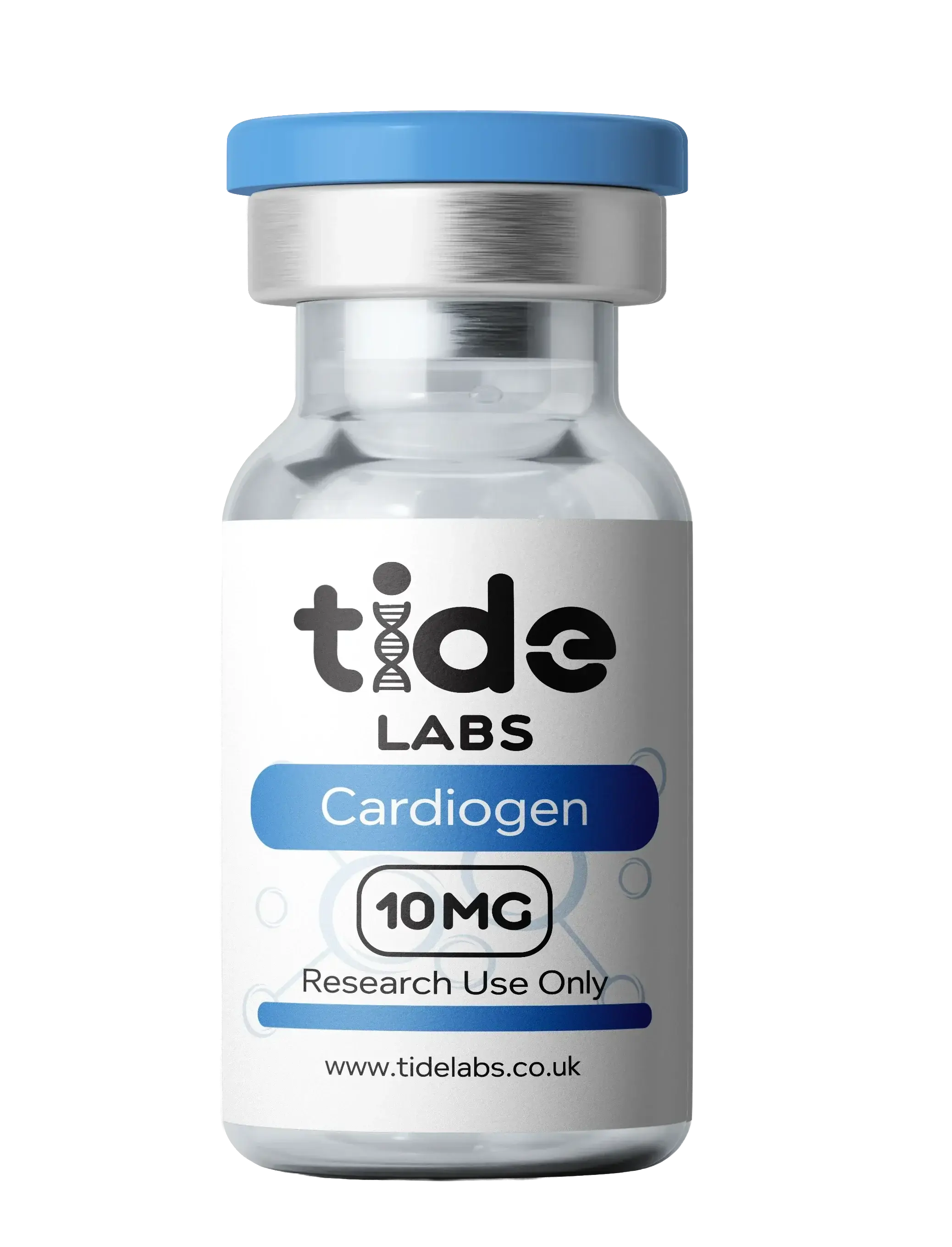
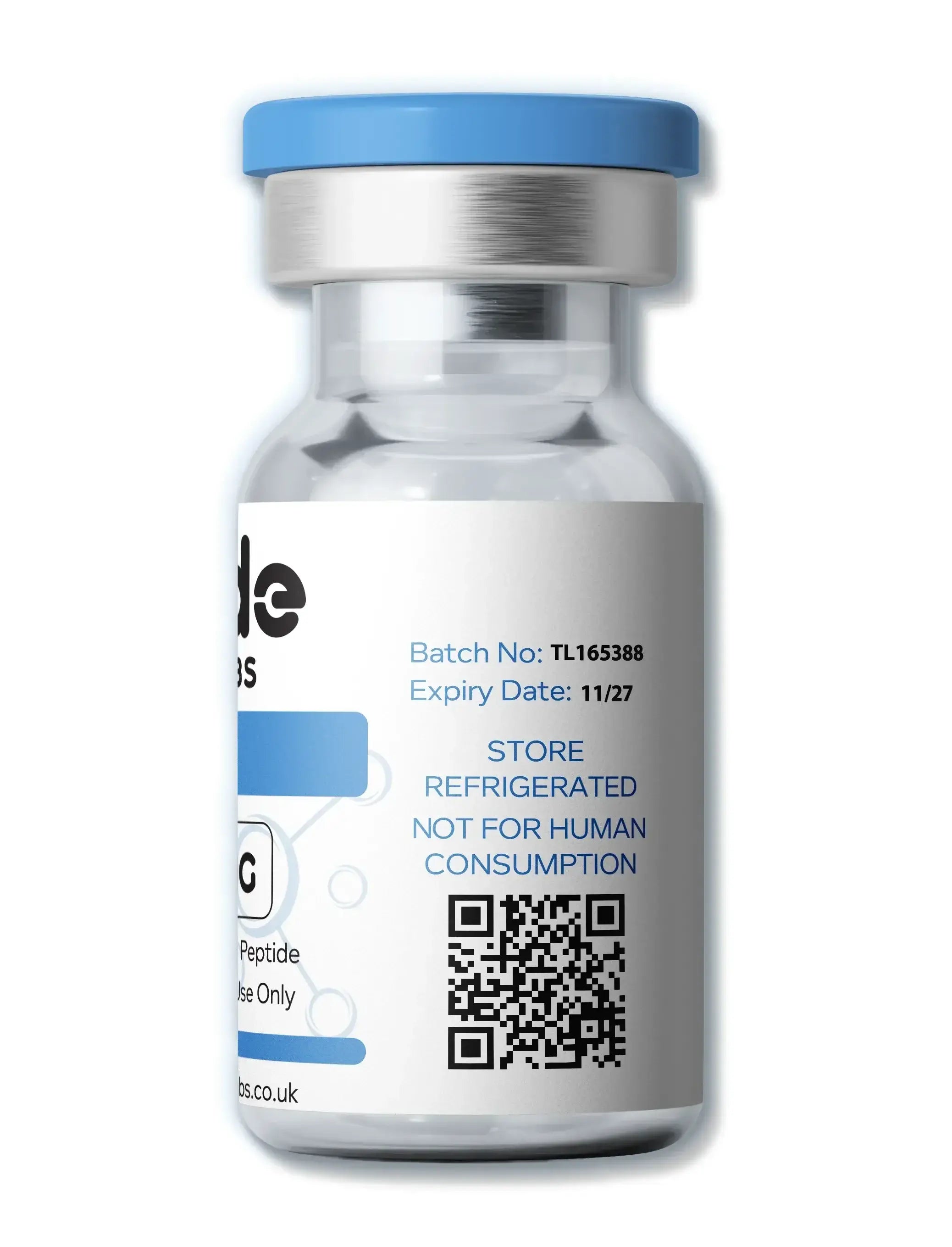


Cardiogen
Certificate of Analysis (COA): See Images
Cardiogen (Ala-Glu-Asp-Arg) is a synthetic tetrapeptide that has drawn research attention for an unusual reason: its apparent effect on the structural proteins that give a cell its shape. One of the smaller members of the Khavinson bioregulator family, Cardiogen has been studied in cardiac-derived cell systems for its reported influence on cytoskeletal and nuclear-matrix protein synthesis, cell proliferation, and apoptosis-related signalling. While not approved for human or veterinary use, it is used in laboratory and academic research as a model organ-specific short peptide.
Research Applications
The published literature on Cardiogen, drawn almost entirely from preclinical cell-culture and animal studies, centres on a few recurring themes:
- Cytoskeletal & Nuclear-Matrix Proteins: In cultured fibroblasts, Cardiogen has been reported to increase the expression of cytoskeletal proteins (actin, tubulin, vimentin) and nuclear-matrix proteins (lamin A and lamin C), the structural scaffolding of the cell.
- Cardiomyocyte Proliferation: In myocardial tissue cultures from young and aged rats, the peptide has been studied for its stimulating effect on cell proliferation, assessed using markers such as Ki-67, with the effect notable in aged tissue.
- Apoptosis Signalling: Research has examined Cardiogen's reported association with reduced p53 protein expression in myocardial cell models, a pathway linked to programmed cell death.
What makes Cardiogen of particular interest to researchers is the proposed link between these threads: that by promoting structural-protein synthesis, the peptide may influence cell proliferation and survival at the same time. Its molecular identity and structure are catalogued in the NIH PubChem database, and it is commonly studied in parallel with other Khavinson bioregulators such as Cortagen and Pancragen.
Technical Information
- Chemical Name: L-Alanyl-L-α-glutamyl-L-α-aspartyl-L-arginine
- Synonyms: AEDR, H-Ala-Glu-Asp-Arg-OH, Cardiogen
- Molecular Formula: C₁₈H₃₁N₇O₉
- Molecular Weight: 489.5 g/mol
- Sequence (Amino Acid): Ala-Glu-Asp-Arg (AEDR)
- CAS Number: Not assigned
- Peptide Classification: Synthetic Khavinson organ-specific short peptide bioregulator (tetrapeptide)
Storage Guidelines
- Lyophilized peptide is stable at room temperature for several weeks.
- For long-term storage, keep at −20°C or below.
-
Once reconstituted, store at 2–8 °C. Effective use depends on the solution used.
Solubility
Cardiogen reconstitutes readily in bacteriostatic water and is also reported to dissolve in standard aqueous buffers.
References
- Chalisova, N. I., Lesniak, V. V., Balykina, N. A., et al. (2009). "The effect of the amino acids and cardiogen on the development of myocardial tissue culture from young and old rats." Advances in Gerontology, 22(3), 409–413. https://pubmed.ncbi.nlm.nih.gov/20210190/
- Khavinson, V. K., Popovich, I. G., Linkova, N. S., et al. (2021). "Peptide Regulation of Gene Expression: A Systematic Review." Molecules, 26(22), 7053. https://doi.org/10.3390/molecules26227053
- Khavinson, V. K., Lin'kova, N. S., & Tarnovskaya, S. I. (2016). "Short Peptides Regulate Gene Expression." Bulletin of Experimental Biology and Medicine, 162(2), 288–292. https://doi.org/10.1007/s10517-016-3596-7
The Difference Is Clear
Tide Labs vs. Typical UK Suppliers
Most UK peptide suppliers cut corners on testing, storage, and documentation. Here's what sets us apart.